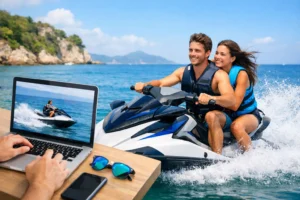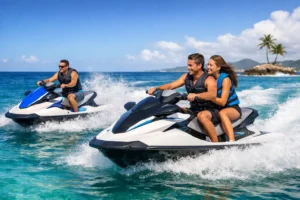
There's a huge difference between getting on a jet ski and enjoying it from the first minute, or spending the whole outing readjusting your clothes, shivering, or thinking you made a terrible choice. If you're wondering... What clothes to wear on a jet ski, The answer isn't about looking "good for the photo." It's about being comfortable, moving well, and being able to focus on what matters most: the speed, the sea, and that addictive feeling of freedom.
The good news is that you don't need complicated equipment or to spend a fortune. The key is choosing clothing that gets wet well, is lightweight, doesn't chafe, and allows you to enjoy yourself without distractions. And yes, depending on the time of year, the wind, and your tolerance for the cold, there are some nuances you should consider before booking and heading out on the water.
What to wear on a jet ski depending on the season
In summer, the most practical option is usually a well-fitting swimsuit or bikini. It seems obvious, but here's an important detail: not just any beachwear works equally well when you're speeding, constantly splashing, and facing a headwind. Clothes that are too loose, have awkward knots, or don't provide enough support can end up being more of a nuisance than a comfort.
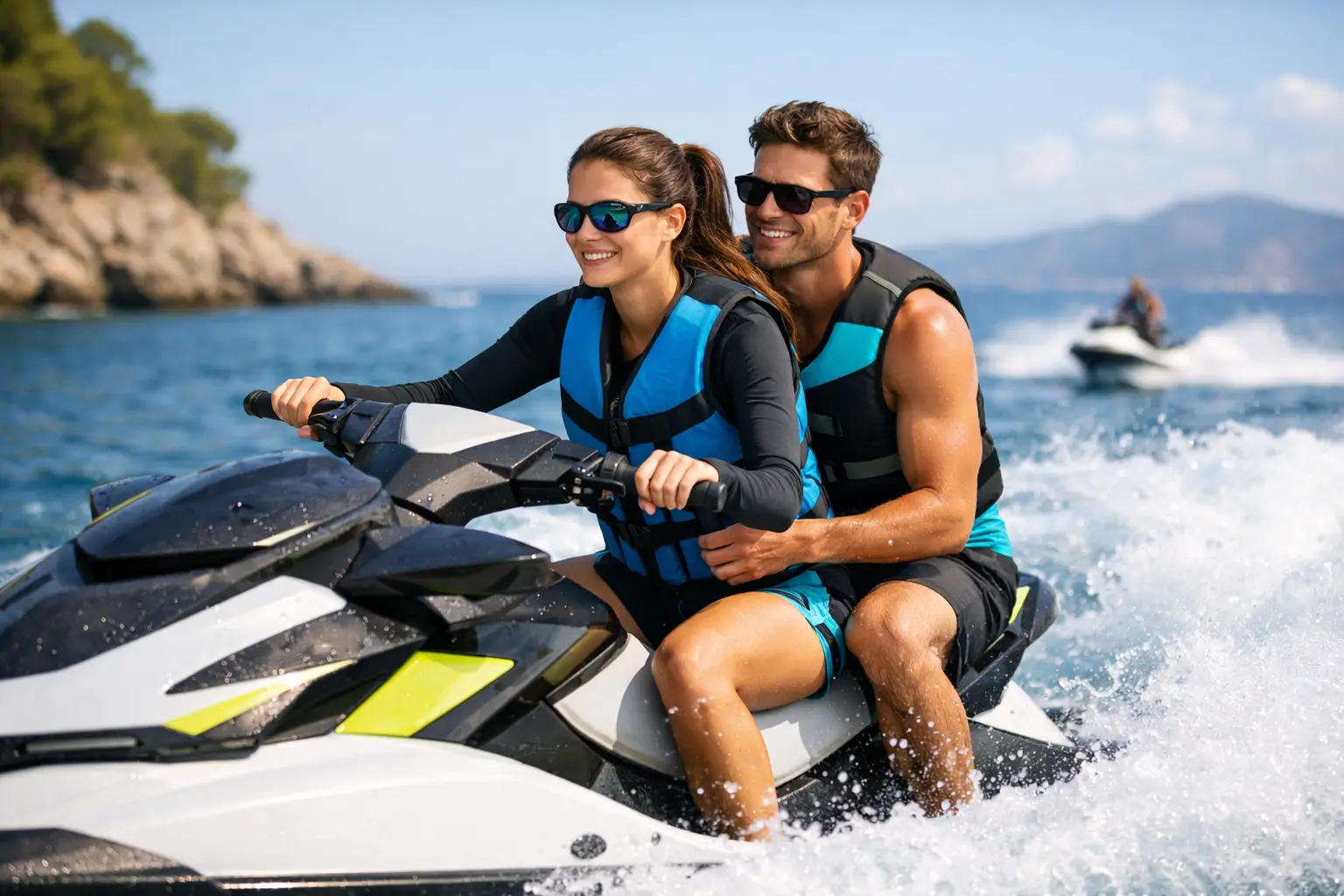
For men, a surf-style or fitted swimsuit works great. For women, a sporty bikini or one-piece swimsuit is ideal. If you choose a bikini, make sure it has good support in the top and doesn't rely on thin straps or flimsy closures. On a jet ski, you want to forget about your clothes, not worry about them.
When it's not so hot, things change. Spring and autumn can offer spectacular days at sea, but the wind amplifies the feeling of cold. In that case, a thermal shirt or long-sleeved rash guard over your swimsuit makes all the difference. It doesn't make you too hot, dries better than a regular t-shirt, and avoids that initial feeling of cold water that can disrupt some people's rhythm.
If you're heading out on a cool day or you're someone who gets cold quickly, a short or thin wetsuit is an excellent option. It won't always be essential, as it depends on the duration of the activity and the actual temperature, but it provides comfort and thermal protection. Sometimes it's not about being warm, but about avoiding discomfort halfway through the experience.
The best clothes for comfort and freedom of movement.
The best choice is almost always the simplest. Fitted swimwear, technical fabrics if you want an extra layer, and no heavy clothing. A cotton t-shirt seems harmless before you go out, but when it gets wet, it sticks to your body, weighs you down, and takes a long time to dry. The result: you're less comfortable and feel the wind more.
Therefore, if you are considering What clothes to wear on a jet ski Practically speaking, think about materials that work in your favor. Lycra, swim shirts, thin neoprene, or swimsuits designed for water sports. Anything that fits the body without being too tight usually works best.
It also matters how you feel. Some people prefer to go in just a swimsuit because they move more easily and enjoy the feeling of the water more. Others feel more secure with an extra layer. There's no one-size-fits-all option. If it's your first time, It is usually worth prioritizing comfort and support over aesthetics.
What you should never wear
This is where many people go wrong. Not because they're wearing something dangerous, but because they choose clothes designed for a patio, a stroll, or a quiet beach, not for an activity involving water, wind, and movement.
Jeans, casual shorts, dresses, sarongs, baggy shirts, or sweatshirts are a bad idea. They get wet, they're heavy, they snag, they're uncomfortable, and they restrict your movement. The same goes for garments with stiff zippers, metal embellishments, or very prominent seams, which can rub quite a bit when you're sitting down and tense.
Conventional flip-flops are also not recommended during the activity. They are easily lost and do not provide stability. If you are going to wear footwear, it should be closed, lightweight, and suitable for getting wet. Otherwise, many users prefer to go barefoot, provided the activity allows it and they feel comfortable doing so.
And a helpful tip: accessories are almost always unnecessary. Caps, hats, unsecured sunglasses, or jewelry are prime candidates for ending up in the water. If it's not securely fastened, it's best to leave it on land.
Footwear, glasses and accessories: less is more
When jet skiing, less is often more. A certified life jacket is essential equipment, so your clothing should complement that protection, not compete with it. The simpler your undergarments, the easier it will be to move around and enjoy yourself.
Regarding footwear, it largely depends on the type of outing and what makes you feel most secure. Water shoes or ankle boots can be a great option if you don't like walking barefoot or want extra grip when getting on and off the boat. However, if they're too thick or uncomfortable, they're not worth it.
Something similar happens with sunglasses. If they don't have a proper strap, it's best not to risk it. The combination of speed, boats, and saltwater is unforgiving. And the same goes for your phone: if you decide to take it, it's best to use a waterproof case and secure it well. But if your plan is to disconnect and live in the moment, it's almost better to leave it behind.
What to wear on a jet ski if it's your first time
If it's your first time, the smartest thing to do is keep it simple. A swimsuit or bikini, a swim shirt if needed, water-resistant sunscreen, and a towel for afterward. That's it. You don't need to go on an expedition to have a great time.
Many first-time drivers worry more about whether they'll be able to drive than about their clothes, and then discover that the physical discomfort is more of a burden than expected. If your top moves around, your swimsuit rubs, you're wearing a heavy t-shirt, or you're cold when you set off, you'll notice it right away. That's why it's important to prepare the basics well.
The duration of the ride also plays a role. A short, high-energy experience is not the same as a longer route where the wind, humidity, and riding position are more noticeable. The more time you spend on the bike, the more valuable it becomes to wear truly functional riding gear.
After the activity it also counts
Choosing the right outfit doesn't just affect your time on the water. It also makes a big difference to how you feel at the end of your day. Packing a change of dry clothes, comfortable clothes to change into, and a large towel are those small decisions that make a big difference to your entire experience. You get out of the water, dry off, change, and continue your day feeling refreshed and energized, instead of feeling damp and cold.
If you come in a group, as a couple, or as part of a vacation, this is even more noticeable. The experience doesn't end when you turn off the engine. It ends when you get off with a smile, look through the photos, and think you want to do it again.
The easy rule for always getting it right
If you have any last-minute doubts, keep this in mind: swimwear that fits snugly, quick-drying fabrics, nothing heavy when wet, and nothing that requires constant readjustment. That's the basics. From there, adjust according to the weather and how you handle the cold.
In a organized outing, With an instructor, briefing, and all the equipment ready, like the experiences at Jetski Alfa, the ideal is to arrive without any hassle. Book, come, and enjoy. The right clothing helps with just that: zero friction, maximum fun.
You don't need to dress like a professional swimmer to feel the adrenaline rush of the Mediterranean. All you need is common sense, comfort, and a desire to have a great time. If you choose clothes that let you move, get wet, and laugh without a care in the world, you're already on the right track.