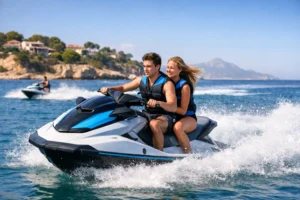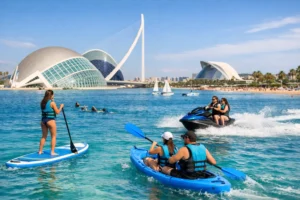
The question doesn't usually arise when you see the calm sea and the jet ski ready to go. It arises just before: when you imagine accelerating, jumping over the water, and wonder if it's really safe to ride a jet ski. The short answer is yes, but not by chance. It's safe when there's organization behind it, clear rules, well-maintained equipment, and an instructor who knows what they're doing.
Jet skis have that adrenaline rush that hooks you from the very first minute. That's precisely why they command respect. And that's a good sign. Those who approach it with a mix of excitement and caution tend to enjoy it more, because they understand that fun on the water isn't about going crazy, but about experiencing speed with control.
Is it safe for beginners to ride a jet ski?
Yes, it's also suitable for beginners. In fact, many people try a jet ski for the first time on vacation, with a partner or friends, without any prior experience. without license. What makes the difference is not having piloted before, but how the activity is organized.
When a trip is well-planned, it all starts on land. Before even touching the water, there should be a clear, easy-to-understand, and straightforward briefing. This should explain the basic rules, how to accelerate, how to turn, what distance to maintain, and what to do if anything unexpected happens. It doesn't need to be a technical lesson. You just need to go out knowing exactly what you can and can't do.
Being accompanied by a professional also makes a big difference. A monitor It's not there to enhance the experience. It's there to guide the route, set the pace, adapt the outing to the group's level, and react if someone gets nervous or makes a mistake. That reduces risks and increases confidence from the very first minute.
What actually makes the activity safe
Talking about safety isn't just repeating that "everything is under control." It's about specifying which elements transform an activity at sea from seeming risky into an exciting, yet well-protected, experience.
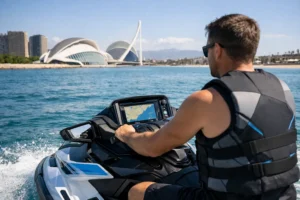
The first requirement is approved equipment. A life jacket is essential and non-negotiable. It must be in good condition, properly fitted, and suitable for the activity. It's not just an accessory; it's a vital safety item.
The second factor is the condition of the jet ski. A machine that has been serviced, maintained, and prepared for tourist use doesn't convey the same feeling as a used vessel that hasn't been properly trained. Throttle response, stability, and safety systems matter much more than they seem when you're on the water.
The third factor is the environment. It's not the same to set out with calm seas, good visibility, and a defined route as it is to improvise. Reputable companies assess the conditions before each trip and, if the sea isn't favorable, they adjust or cancel. This doesn't diminish the excitement; it provides peace of mind.
And then there's insurance. Many people only glance at it when booking, but it's a significant factor. Knowing that the activity includes coverage and operates with transparent procedures completely transforms the experience. You embark on it with greater confidence.
The risks exist, but they're not the ones you imagine.
Yes, there are risks. As with any adventure or sporting activity. Denying it would be irresponsible. But it's important to put them into perspective. The problem isn't usually the jet ski itself. The problem is usually irresponsible use, an unprofessional company, or a user who doesn't follow instructions.
The most common risk isn't being thrown off the bike or experiencing a dramatic scene. What usually happens when someone makes a mistake is losing stability, making a wrong turn, or becoming tense while accelerating. This can be corrected with simple instructions, a speed appropriate to the rider's skill level, and close supervision.
There's also a physical factor. Jet skiing requires attention and some body posture, especially when the sea is rougher. If anyone has recent injuries, significant back pain, or any other medical condition that might make it unsuitable, it's wise to consult with a professional beforehand. Safety also means knowing when an activity isn't right for you that day.
When is it safe to ride a jet ski and when should you think twice?
Here's the important point: it doesn't always depend solely on the activity; it also depends on the individual and the context. For most healthy adults, an organized and guided outing is a safe and highly enjoyable experience. However, there are situations where it's worth carefully considering whether it's the right time.
If you arrive with a high level of fear of water or movement, the first few minutes might feel intense. That's perfectly fine. You can take it one step at a time. However, if that fear completely overwhelms you, the experience may cease to be fun. Jet skiing is meant to release tension, not amplify it.
It's also unwise to get on board with overconfidence. Sometimes, those who have driven cars, motorcycles, or boats the most think that everything works the same here. It doesn't. At sea, the surface, the balance, and the way you react all change. Listening to the briefing, even if you feel like an expert, is still crucial.
And of course, it's never a good idea to do it after drinking alcohol or in less than ideal physical condition. It seems obvious, but it's part of real safety, not just for show.
Tranquility begins before you accelerate.
If you're considering booking, there are several signs that tell you if the experience is well-planned. A professional company clearly explains how the activity works, what's included, who accompanies the outing, and what safety measures are in place. They don't just sell speed. They sell a fun experience that also takes care of first-timers.
This is evident in the details: easy booking, clear instructions, included equipment, professional instructor, pre-trip briefing, and insurance. When all of that is well taken care of, you don't have to improvise. You just get to enjoy yourself.
That's one of the reasons why so many people come back. The first time They often arrive wondering if it will be too much. The second group comes looking for that perfect blend of excitement, coastal views, and the feeling of freedom that can only be understood when you open the throttle over the Mediterranean.
What can you do to make the experience even safer?
Safety isn't solely the company's responsibility. You also play a significant role in how the activity unfolds. Listening carefully before starting seems basic, but it completely transforms the experience. Those who understand the instructions from the beginning adapt more quickly, drive better, and enjoy themselves more.
It also helps not to try to impress anyone. Not your partner, not your group, not social media. The best outing isn't the most extravagant, but the one that leaves you with a smile, great photos, and wanting to do it again. The pace will come naturally if you feel comfortable.
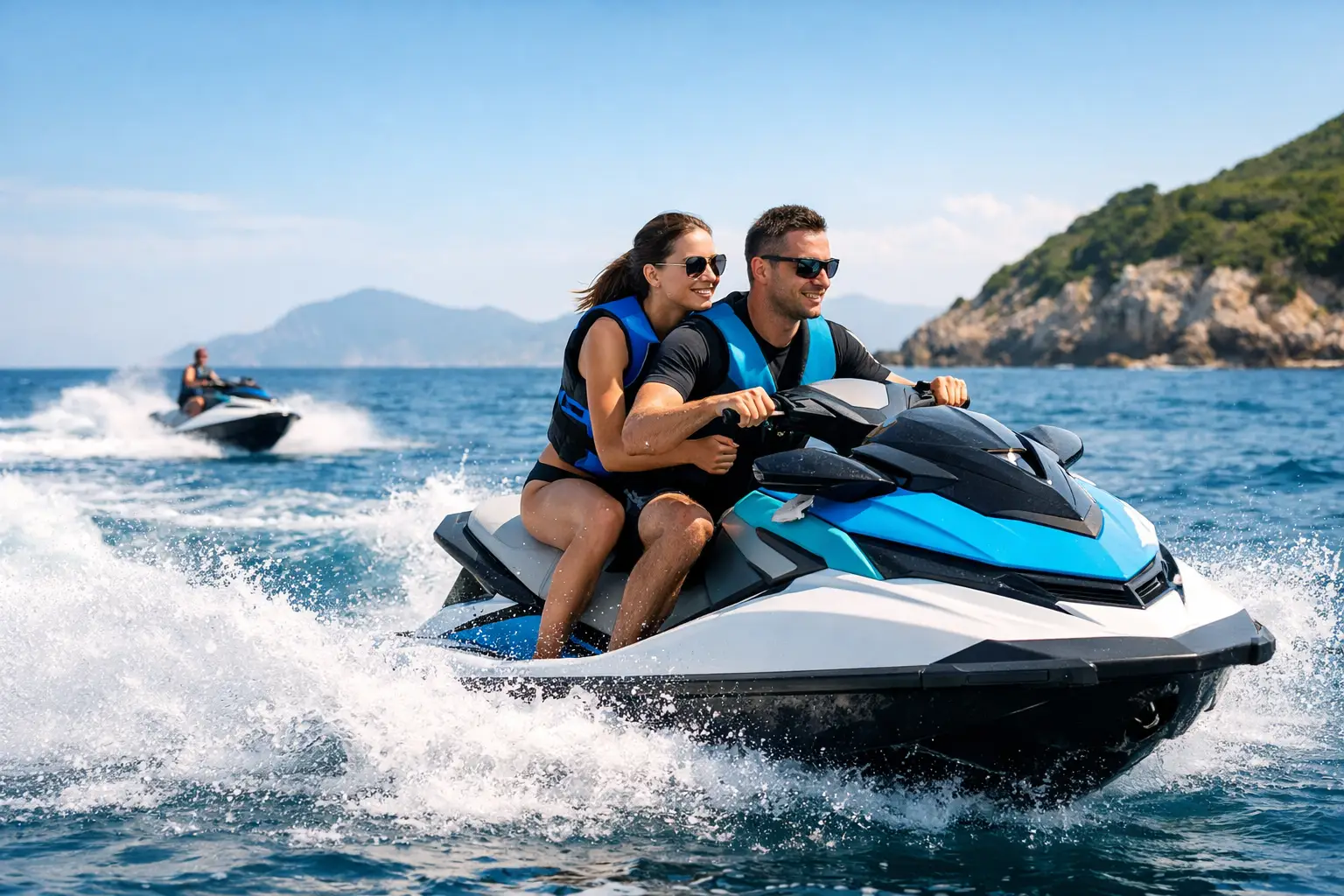
If you're riding with a passenger, especially if you're sharing a motorcycle, coordination is key. The passenger isn't just there for show. They need to follow instructions, position themselves correctly, and move with the rider. When the driver and passenger understand each other, the experience is much smoother.
And there's something else many people appreciate knowing: you don't have to go fast to have a good time. The feeling of gliding through the water, seeing the coastline from a different perspective, and experiencing that sense of freedom is worthwhile even at a moderate pace.
Safety and fun don't compete
There's a common misconception that the more controlled an activity is, the less exciting it is. With jet skis, the opposite is true. When you know there's an instructor, certified equipment, and a planned route, you relax. And when you relax, you truly enjoy yourself.
Good adrenaline doesn't come from chaos. It comes from feeling power with confidence. From noticing the sea, the wind, and the speed, knowing you're in an experience designed for everything to flow smoothly. That balance between excitement and tranquility is what transforms an ordinary outing into a powerful memory.
So, if you're still wondering whether it's safe to ride a jet ski, remember this: yes, it is, if you choose wisely, listen to the instructions, and leave the experience in professional hands. In places like Valencia, with organized trips from the marina, an instructor, and everything ready to go so you can arrive and enjoy yourself, the fear barrier doesn't last long. What usually lingers much longer is that feeling of having done something different, exciting, and surprisingly easy to enjoy.
If you feel like trying something that gets your heart racing without complicating your life, the best moment doesn't come when all doubts disappear, but when you find an experience that makes you feel safe even before you get on.